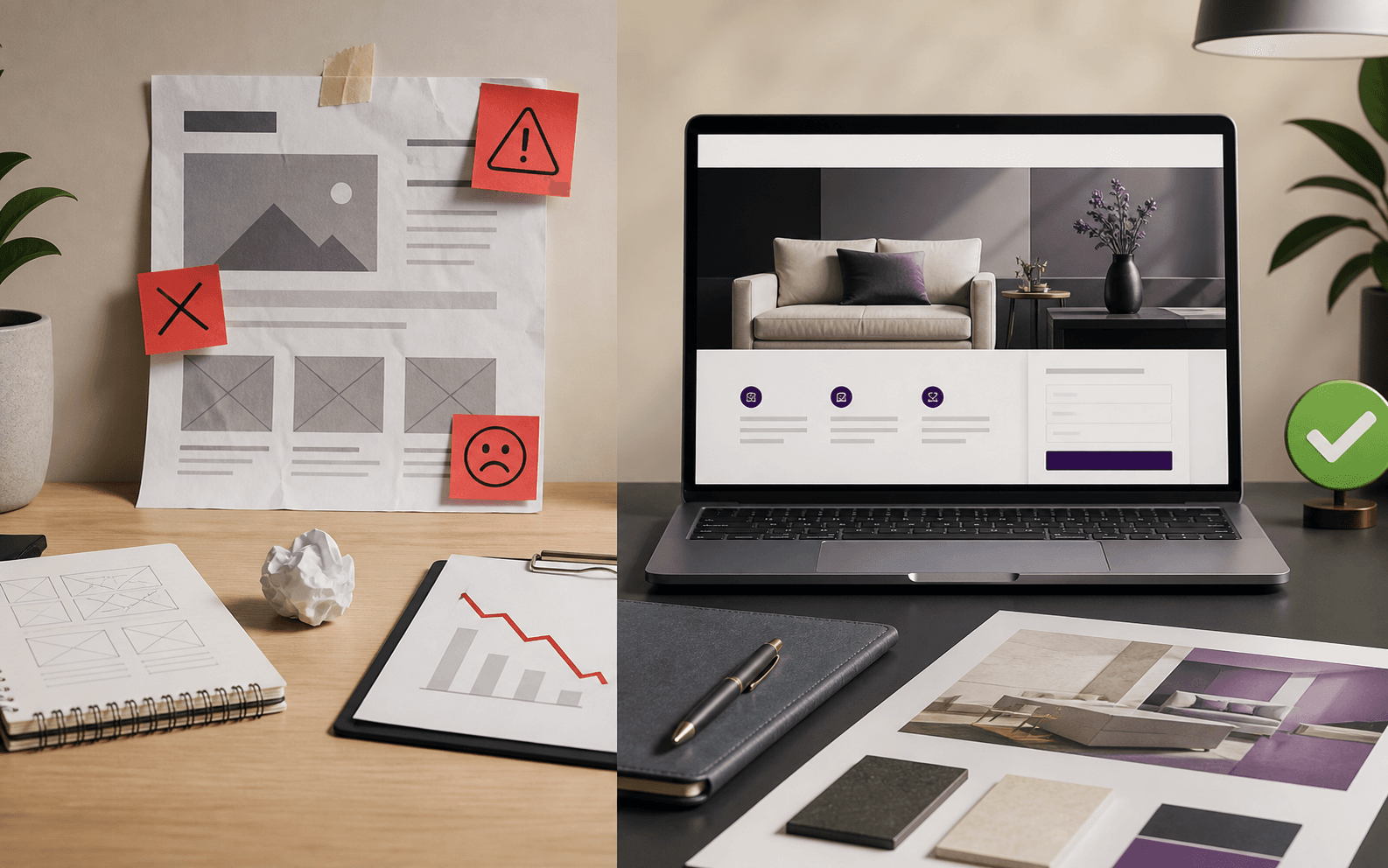
The appeal of a cheap website is obvious. It promises speed, convenience, and a lower upfront investment. But for businesses trying to attract better clients or charge at a premium level, cheap design often creates a more expensive problem underneath.
The issue is not only aesthetics. A weak website changes how your business is interpreted. It affects trust, lead quality, and how easy it is for a prospect to believe your pricing.
The visible savings hide invisible losses
Cheap websites tend to save money in the areas that matter most: strategic thinking, copy quality, offer clarity, interface refinement, and performance. Those are exactly the things that shape whether a site actually helps a business grow.
When those layers are missing, the site may still exist, but it works below the level you need. It attracts weaker leads, creates more hesitation, and often leaves the business relying on manual selling to close gaps the website should have handled.
Where the real cost shows up
- Lower trust from visitors who cannot quickly assess quality.
- Poorer lead quality because the positioning feels too broad.
- More price resistance because the brand does not feel valuable enough.
- Faster redesign cycles because the first version does not age well.
That is why cheap websites often become double-spend projects. Businesses pay once to get something live, then pay again when they realise it is holding the brand back.
Premium brands need alignment
If your service is attentive, tailored, and high-quality, the website should reflect that with the same level of discipline. Buyers read a lot from a website. If it feels rushed or generic, they assume parts of the service might be too.
Premium positioning is fragile online. One bad visual decision or weak headline can reduce perceived value faster than most founders realise.
Spend where conviction is built
The better question is not “how cheaply can we get a website?” but “what does the website need to do for the business?” If it needs to attract higher-value work, support stronger pricing, and create trust faster, then the build has to include more than surface execution.
That means strategy, copy, structure, proof, and conversion flow all matter. The result does not just look better. It reduces friction in sales and creates a more believable business case for choosing you.
Cheap websites can work for low-stakes situations. But if your business wants to operate at a premium level, they usually cost more in lost opportunity than they save in budget.